Production-grade complaint management system with real-time email automation, role-based access control, and responsive dashboards.
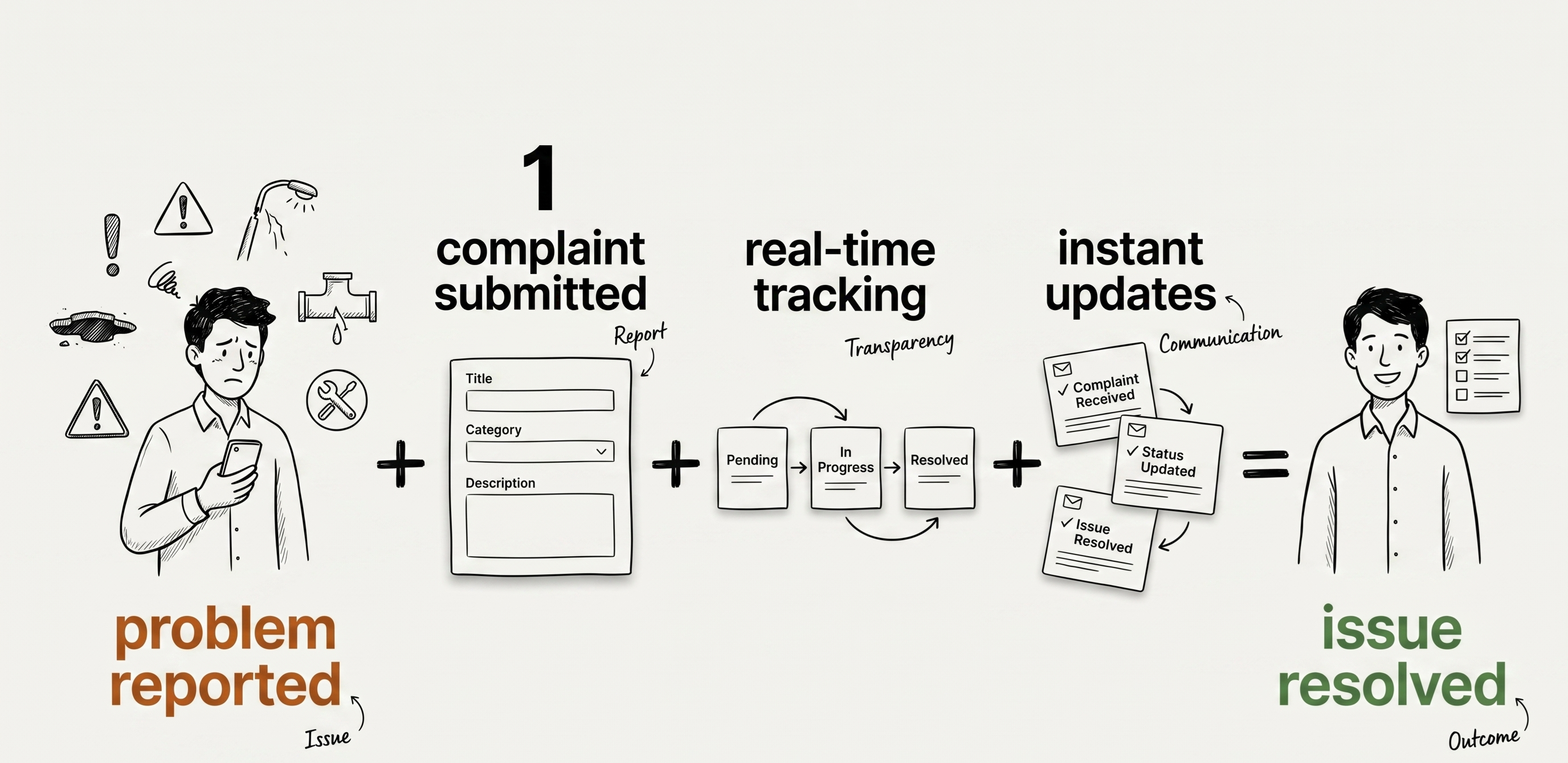
Submitting a complaint is easy. Knowing what happens next is not.
Many complaint systems fail because users lose visibility after submission. Reports disappear into inboxes, updates are delayed, and accountability becomes unclear. I built ComplaintHub to create a transparent workflow where users could track progress and receive updates throughout the entire lifecycle. The objective was to transform complaints from isolated messages into structured, trackable processes.
Speed mattered because the project was built during a hackathon.
With only 48 hours available, every architectural decision needed to balance speed and maintainability. Rather than sacrificing quality for rapid delivery, I relied on strong TypeScript patterns, reusable components, and strict validation. This allowed the application to evolve quickly without accumulating technical debt.
“The biggest challenge wasn't generating answers. It was generating answers users could trust.”
Automation became the backbone of the user experience.
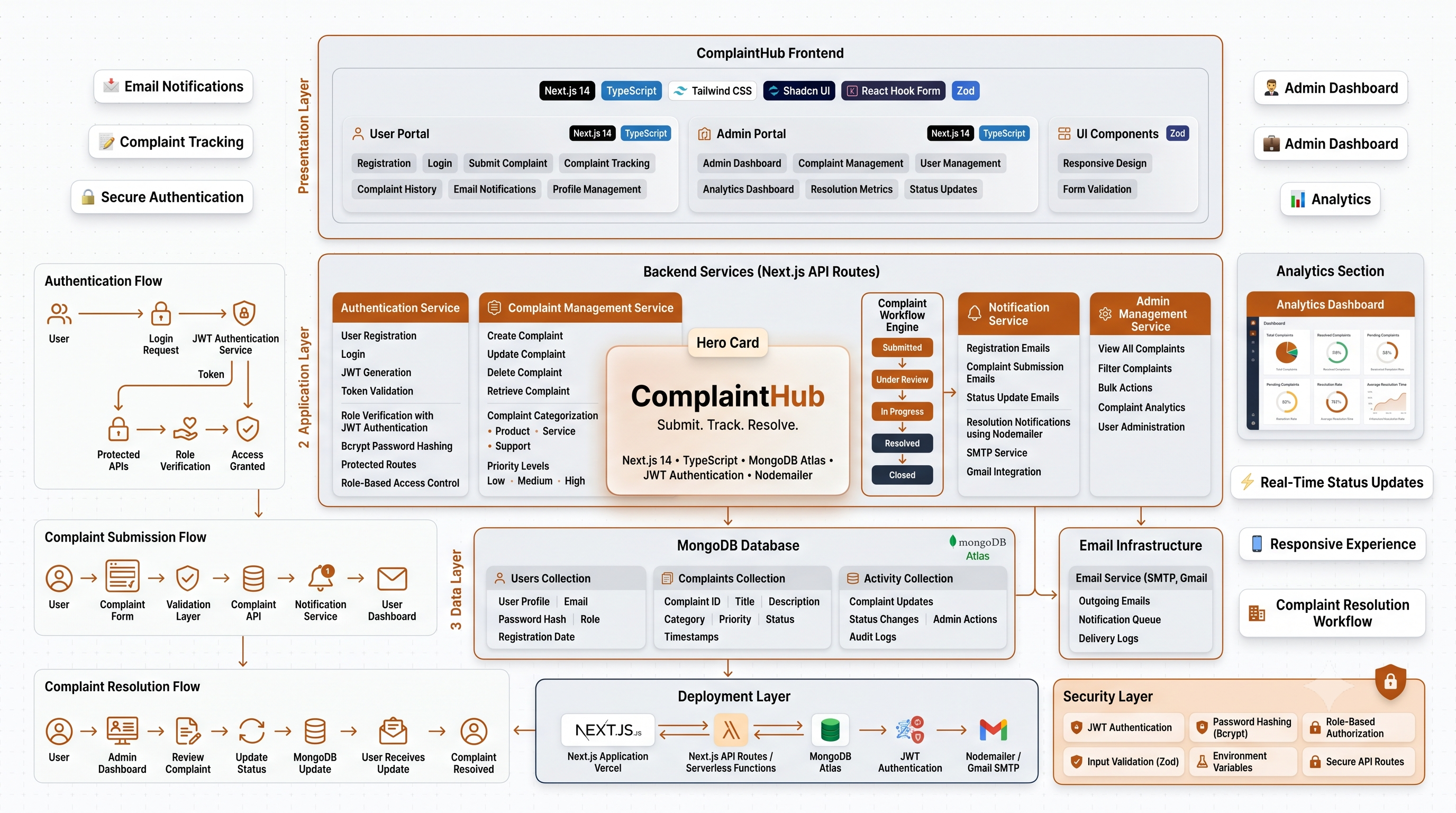
A complaint management platform is only useful if communication remains consistent. I built automated workflows that trigger notifications whenever complaint status changes. Users receive updates without needing to check dashboards manually, while administrators can focus on resolution rather than repetitive communication. This made the system feel responsive even when humans were not actively involved.
Role separation required more than authentication.
The platform needed distinct experiences for users and administrators. Beyond login functionality, I implemented role-based access controls that governed what actions each user could perform. This ensured complaint data remained secure while still allowing administrators to efficiently manage workflows across the platform.
What this project taught me.
ComplaintHub reinforced the importance of execution under constraints. Building a complete product in a limited timeframe required prioritization, architectural discipline, and careful scope management. The biggest lesson was that successful products often come from simplifying workflows rather than adding features.
That’s how I approached this problem.
This is one example of how I make complex things make sense. But, here’s another project where I worked through a different kind of complexity…