I built NyayNetra so users could navigate complex legal documents with confidence and uncover critical insights in seconds.
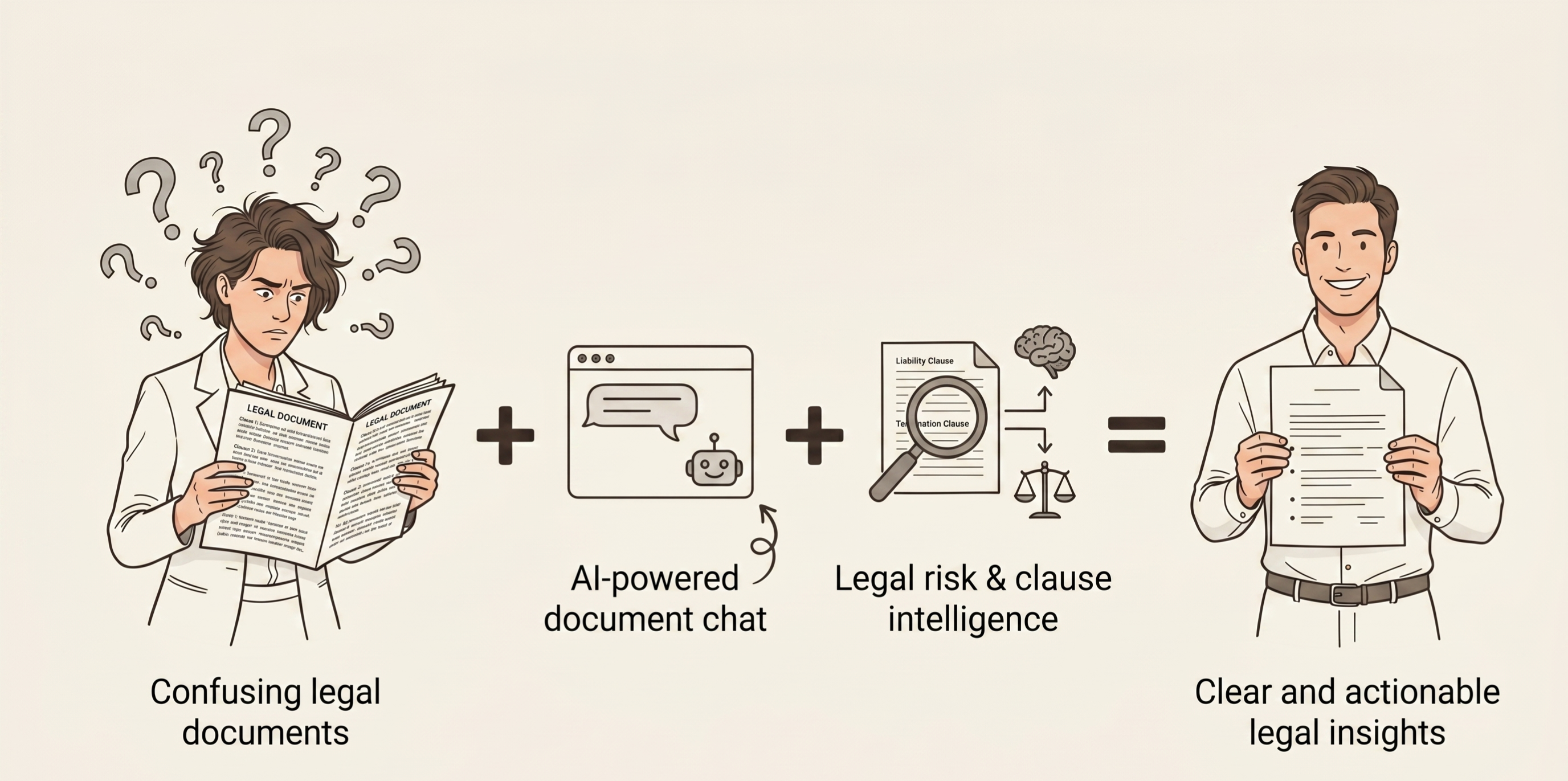
Legal documents are built for lawyers, not for the people who have to read them.
Whether it's a rental agreement, employment contract, or service agreement, most people don't have the time or expertise to manually review dozens of pages of dense legal text. Important obligations, liabilities, and risk clauses are often buried inside language that is difficult to interpret. I built NyayNetra to make legal documents easier to understand. Instead of forcing users to search through pages of text, the platform lets them upload a document, ask questions in plain English, and instantly uncover critical clauses, obligations, and risks.
Building another chatbot wasn't enough.
The biggest challenge wasn't generating answers—it was generating answers users could trust. In legal workflows, a confident but incorrect response is often worse than no response at all. Large language models are excellent at producing natural language, but they can also invent facts when they don't have the right context.
“The biggest challenge wasn't generating answers. It was generating answers users could trust.”
Retrieval became the foundation of the product.
To address hallucinations, I designed NyayNetra around retrieval rather than generation. Every answer begins by finding the most relevant sections of the uploaded document before the model generates a response. Documents are chunked, embedded, searched semantically, and only the most relevant context is passed to the language model. This keeps responses grounded in the source material.
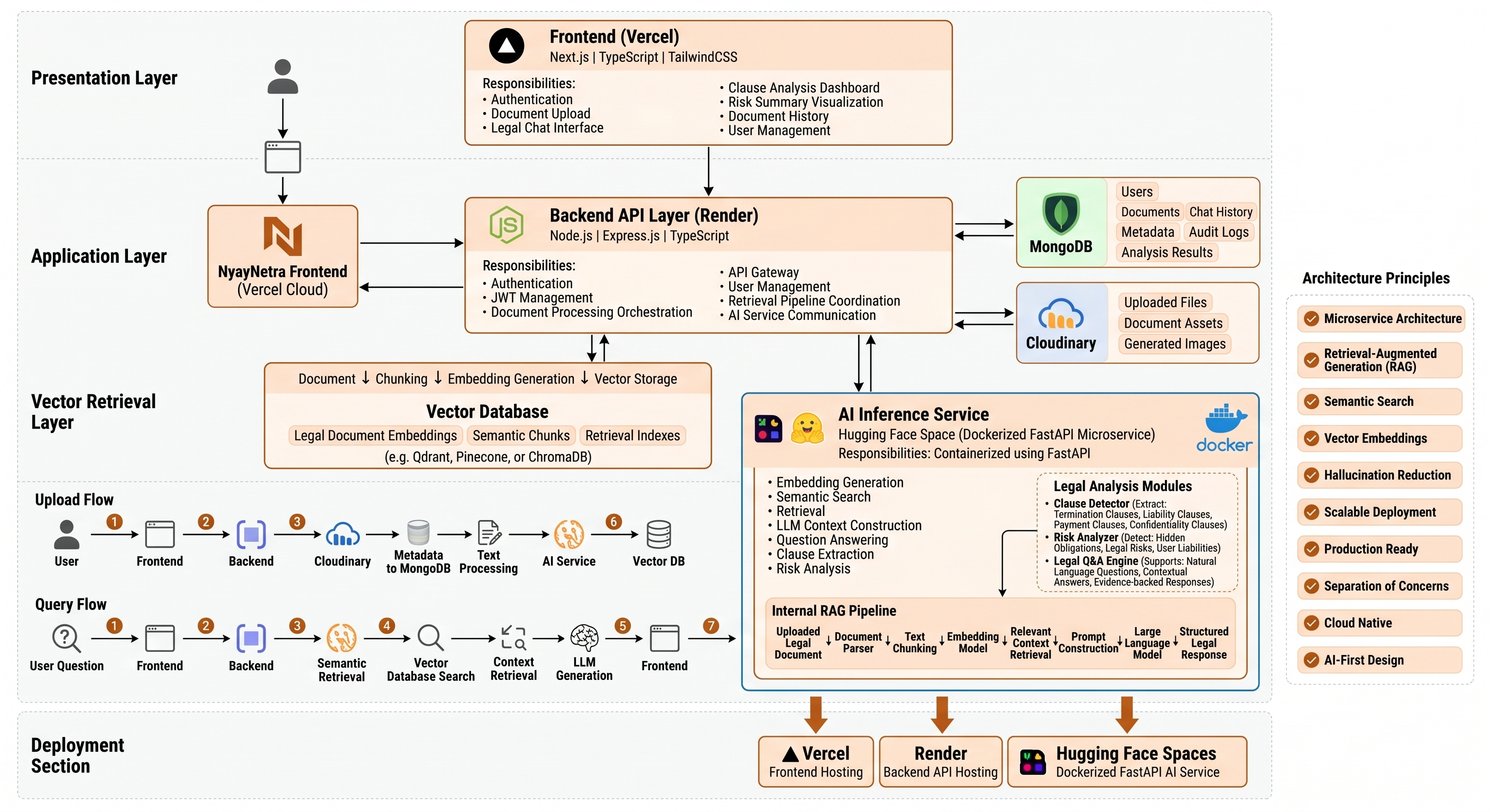
Production deployment required a different architecture.
As the project evolved, it became clear that running embedding models, retrieval pipelines, document processing, and inference inside a single application would be difficult to scale. I separated AI workloads into dedicated Python microservices while keeping the application layer responsible for orchestration and user interactions. This allowed the platform to remain lightweight, scalable, and easier to maintain.
What this project taught me.
NyayNetra taught me that successful AI products are rarely about the model alone. They are about reliability, retrieval quality, architecture, deployment strategy, and creating enough trust that users can confidently act on the information they receive.
That’s how I approached this problem.
This is one example of how I make complex things make sense. But, here’s another project where I worked through a different kind of complexity…