Advanced conversational AI math tutor with LangGraph orchestration, DSPy symbolic reasoning, Qdrant semantic search, and MCP web search fallback.
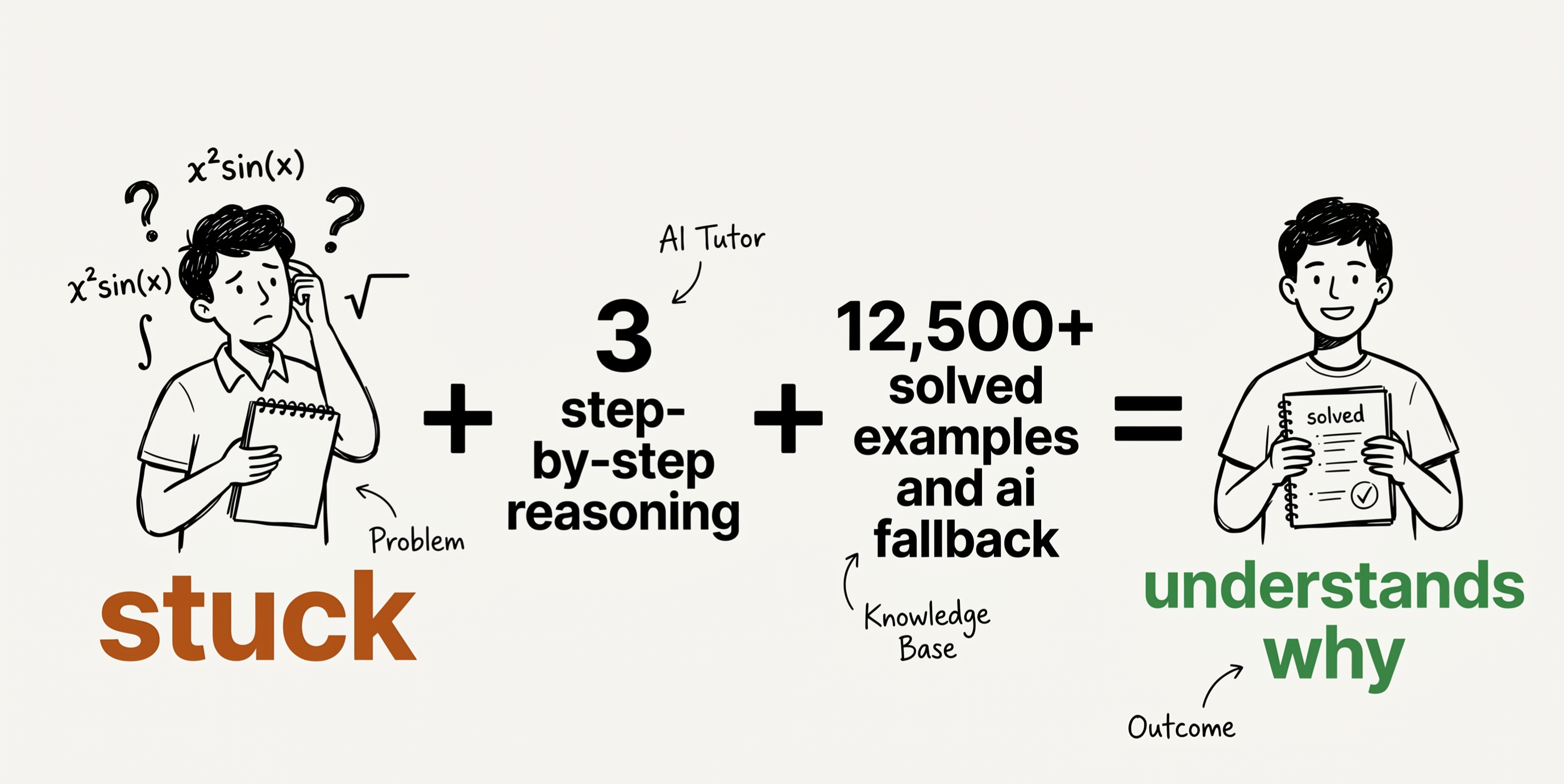
Most AI tutors solve problems. Few actually teach.
Many AI-powered learning tools focus on delivering answers as quickly as possible. The problem is that students often need guidance more than solutions. I built Math Agent around the idea that AI should function as a teaching partner rather than an answer generator. Every interaction was designed to help students understand the reasoning process instead of simply reaching the final result.
One model couldn't handle every situation.
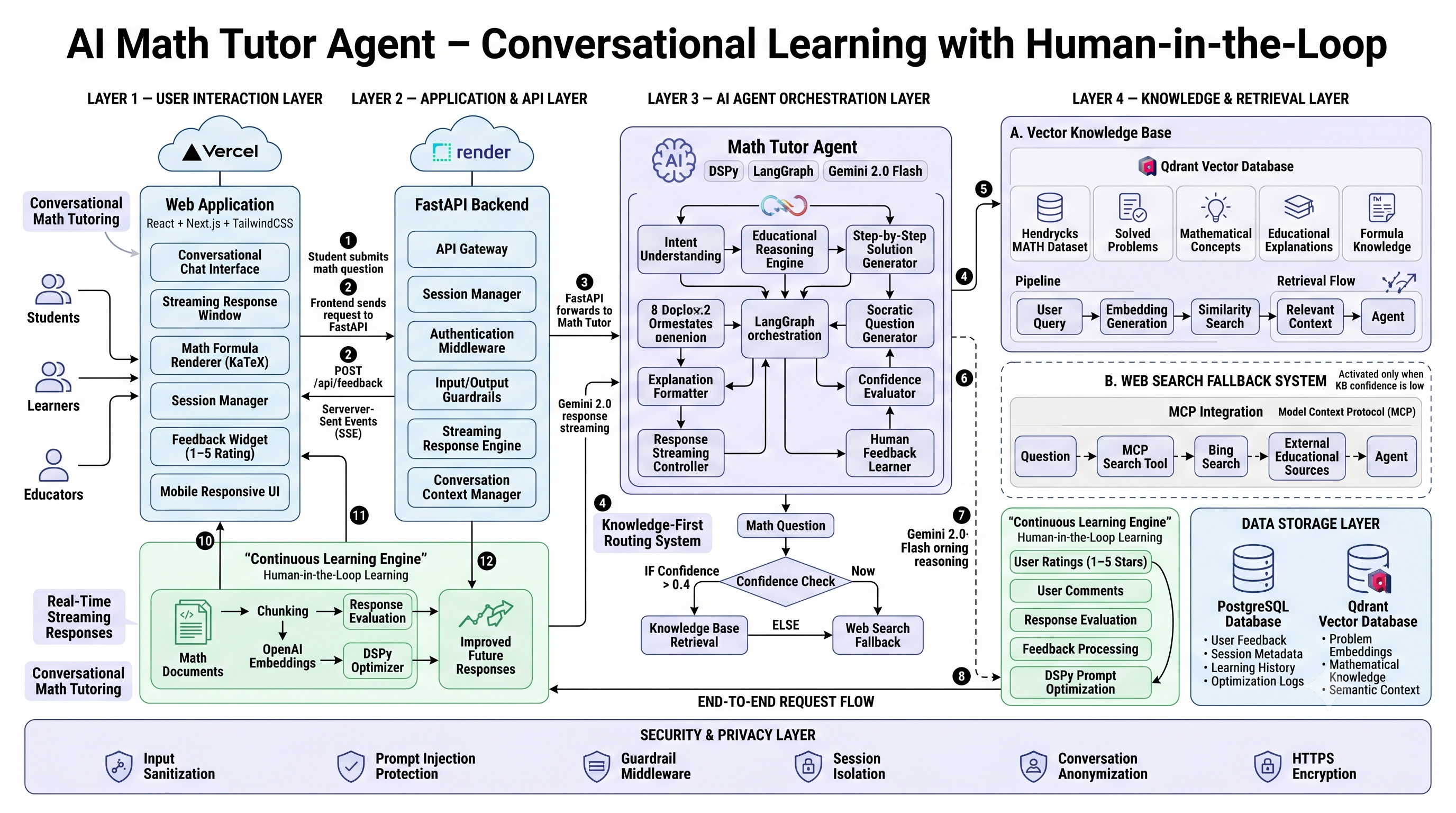
Mathematical questions vary significantly in complexity. Some require factual knowledge, others require symbolic reasoning, and some need external context. I designed a workflow that could intelligently route requests between reasoning systems, semantic search, and web retrieval. This allowed the agent to adapt its strategy based on the problem rather than relying on a single response mechanism.
“The biggest challenge wasn't generating answers. It was generating answers users could trust.”
Trust depends on knowing when the AI doesn't know.
A major challenge in educational AI is preventing confident mistakes. To improve reliability, I integrated a semantic knowledge base containing thousands of curated math problems. The system first attempts retrieval before generating answers, ensuring responses remain grounded in verified examples and concepts. When confidence is low, the workflow can escalate to external retrieval instead of guessing.
Learning happens through conversation, not static answers.
I wanted students to feel like they were working with a tutor rather than reading a solution sheet. Using streaming responses, the agent delivers explanations incrementally and reveals reasoning step by step. This created a more natural learning experience where users could follow the process as it unfolded instead of receiving a wall of generated text.
What this project taught me.
Math Agent taught me that building AI products is often about orchestration rather than model selection. Reliability emerged from combining retrieval, reasoning, workflow routing, and feedback loops. The most valuable lesson was that effective AI systems are built by connecting specialized components into a coherent experience.
That’s how I approached this problem.
This is one example of how I make complex things make sense. But, here’s another project where I worked through a different kind of complexity…