Full-stack movie discovery platform featuring a custom-built content-based recommendation engine using vector modeling and similarity scoring.
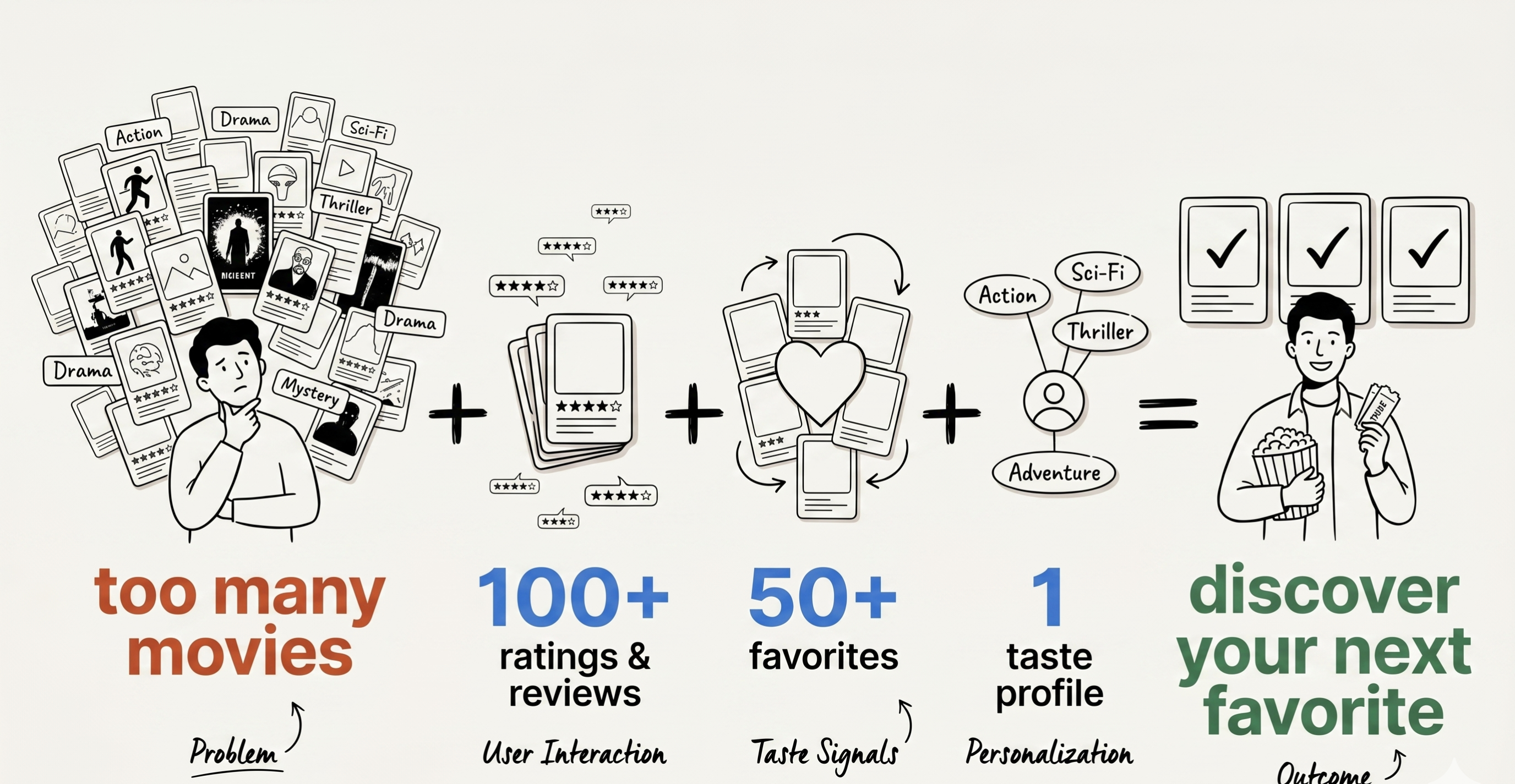
Most movie platforms know what is popular, but not what you actually like.
Many recommendation systems feel generic because they rely heavily on trending content. I wanted to understand how recommendation engines work beneath the surface, so I built MovieMeter around personal taste rather than popularity. The goal was to create a system that could learn from a user's preferences and suggest movies based on similarity instead of simply promoting what everyone else was watching.
Recommendations start with representing movies as data.
The biggest challenge wasn't building the interface—it was teaching the system how to understand movies. Every film needed to be converted into a numerical representation using genres, keywords, metadata, and descriptions. By transforming movies into vectors, I could compare them mathematically and discover relationships that aren't obvious through simple category matching.
“The biggest challenge wasn't generating answers. It was generating answers users could trust.”
Similarity became the core decision-making engine.
Once movies were represented as vectors, I built a recommendation pipeline around cosine similarity. User preferences were converted into profile vectors by aggregating highly rated movies. The system then compared that profile against thousands of unseen titles and surfaced the closest matches. This allowed recommendations to remain personalized, explainable, and consistent.
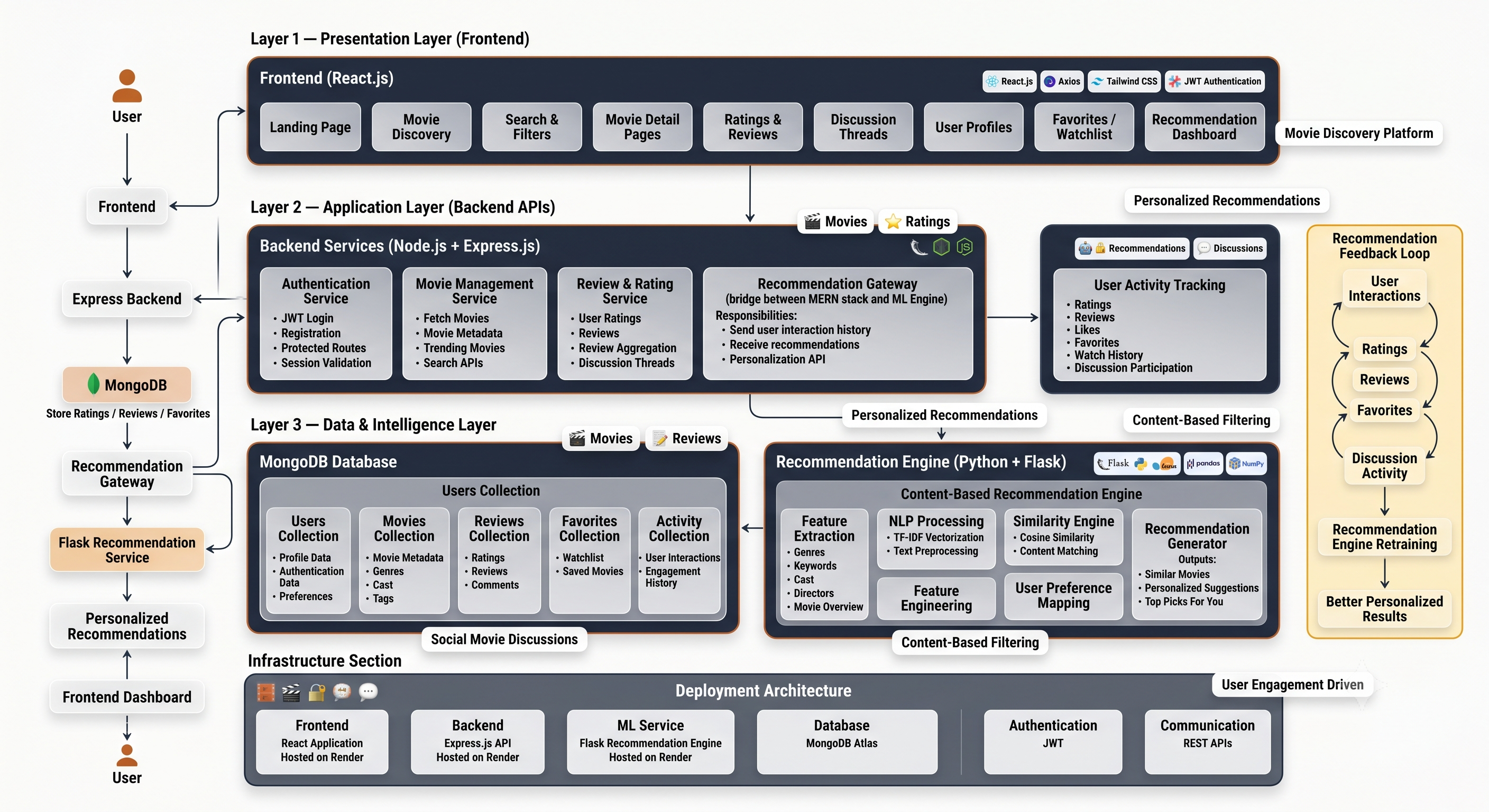
The hardest problem appeared before users had any data.
Recommendation systems depend on user history, but new users arrive with none. To solve this cold-start problem, I implemented fallback recommendation strategies that combine globally popular titles with lightweight preference signals. This ensured users received useful recommendations immediately while the platform gradually learned their tastes.
What this project taught me.
MovieMeter taught me that machine learning products are rarely just about algorithms. They require thoughtful data modeling, meaningful feature engineering, and a deep understanding of how users interact with recommendations. Good personalization comes from designing the entire feedback loop, not simply choosing a similarity metric.
That’s how I approached this problem.
This is one example of how I make complex things make sense. But, here’s another project where I worked through a different kind of complexity…